
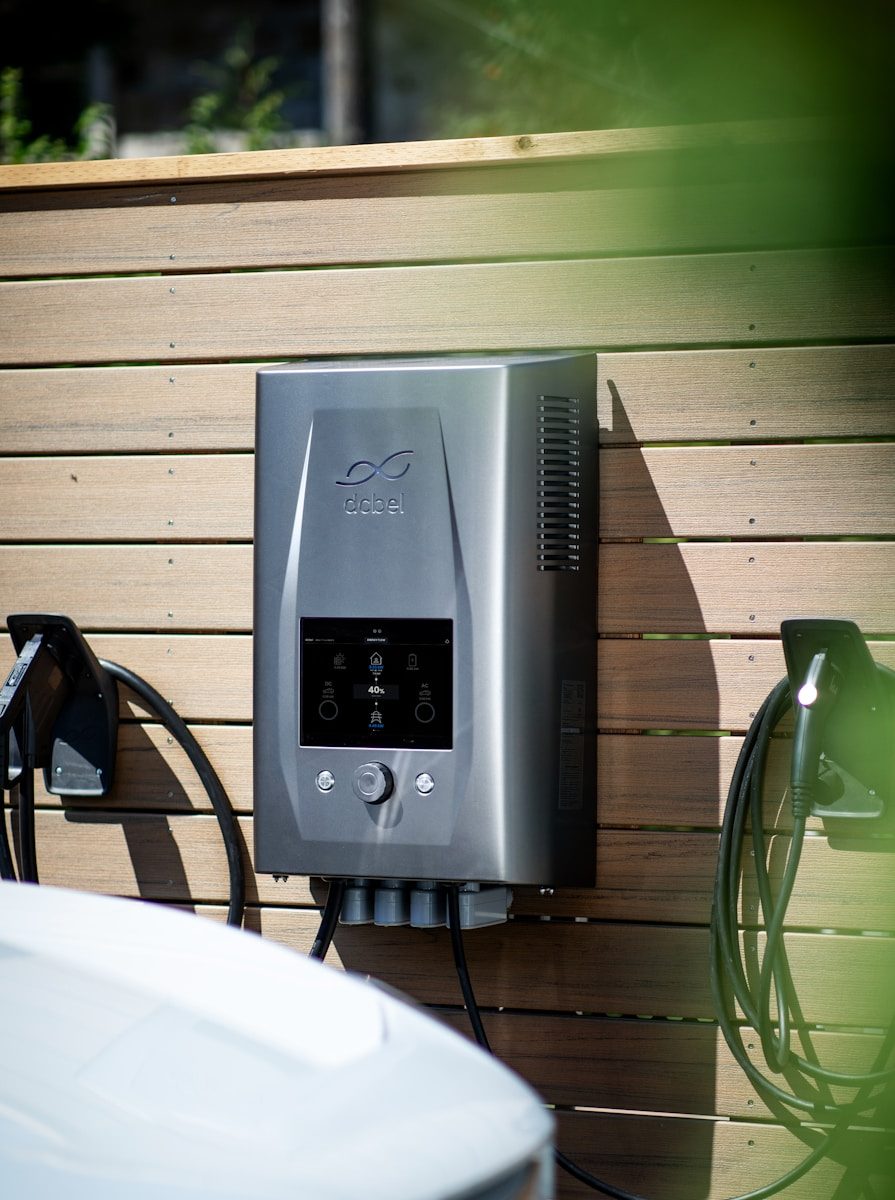
This backup battery runtime calculator estimates how long a portable power station, power bank or battery system can operate selected equipment. Enter the battery capacity, starting charge, usable-energy factor and total load to produce a practical runtime estimate.
Runtime is not determined by battery capacity alone. The battery must also provide enough continuous output and starting surge for the equipment. Conversion losses, inverter overhead, battery condition, temperature and devices that cycle on and off can all change the result.
Do not use a generic calculation as the sole backup plan for life-sustaining or clinically required equipment. The UK Government’s power-cut guidance says users of powered medical equipment should agree an outage plan with their care provider, clinical team or equipment supplier.
Backup battery runtime calculator
Calculator 1: watt-hour power station
Use this calculation when the power station or battery label gives its capacity in watt-hours, shown as Wh.
Estimated runtime in hours = rated capacity in Wh × starting charge fraction × usable-energy factor ÷ total load in watts
| Calculator entry | Your figure | Example |
|---|---|---|
| A. Rated battery capacity | __________ Wh | 1,024 Wh |
| B. Starting charge | __________% | 100% = 1.00 |
| C. Usable-energy factor | __________ | 85% = 0.85 |
| D. Total average load | __________ W | 80 W |
| Runtime: A × B × C ÷ D | __________ hours | 1,024 × 1.00 × 0.85 ÷ 80 = 10.88 hours |
The worked example produces about 10 hours and 53 minutes. It remains an estimate because the 80 W load may vary and the power station may use energy to keep its inverter, display, cooling fan and control electronics operating.
Choosing a usable-energy factor
The factor allows for conversion losses and energy that the system cannot deliver to the connected device. Use a manufacturer figure or a result measured with the actual equipment where available. If neither exists, calculate more than one scenario rather than treating a single percentage as guaranteed.
| Factor | How to use it |
|---|---|
| 1.00 | Theoretical result with no losses. Do not expect this runtime from a real system. |
| 0.90 | Low-loss planning scenario for comparison. |
| 0.85 | General preliminary planning scenario used in the lookup table below. |
| 0.75 | More cautious comparison where losses, overhead or battery condition are uncertain. |
These factors are calculation assumptions, not fixed performance standards. Some systems may perform outside this range, particularly with very small AC loads, high loads, old batteries, cold batteries or equipment operating close to the inverter limit.
Calculator 2: battery rated in amp-hours
If the battery is rated in amp-hours, shown as Ah, convert it to watt-hours first.
Nominal watt-hours = battery voltage × amp-hours
Available battery fraction = starting state of charge minus the required minimum state of charge
Delivered energy in Wh = nominal Wh × available battery fraction × conversion efficiency
Estimated runtime in hours = delivered energy in Wh ÷ total load in watts
| Calculator entry | Your figure | Worked example |
|---|---|---|
| A. Nominal battery voltage | __________ V | 12.8 V |
| B. Battery capacity | __________ Ah | 100 Ah |
| Nominal energy: A × B | __________ Wh | 1,280 Wh |
| C. Starting state of charge | __________% | 100% |
| D. Required minimum state of charge | __________% | 20% |
| Available fraction: C minus D | __________ | 80% = 0.80 |
| E. Inverter or conversion efficiency | __________ | 90% = 0.90 |
| Delivered energy | __________ Wh | 1,280 × 0.80 × 0.90 = 921.6 Wh |
| F. Average load | __________ W | 120 W |
| Runtime: delivered energy ÷ F | __________ hours | 921.6 ÷ 120 = 7.68 hours |
The voltage, minimum state of charge and permitted discharge must come from the battery, inverter or system instructions. The example values are assumptions for demonstrating the calculation, not recommended settings for every battery.
Calculator 3: power bank rated in mAh
Power banks are often advertised in milliamp-hours, shown as mAh. The UK Civil Aviation Authority’s battery guidance gives this conversion:
Watt-hours = battery voltage × mAh ÷ 1,000
| Calculator entry | Your figure | Example |
|---|---|---|
| A. Capacity | __________ mAh | 20,000 mAh |
| B. Nominal battery voltage | __________ V | 3.7 V |
| Nominal energy: A × B ÷ 1,000 | __________ Wh | 20,000 × 3.7 ÷ 1,000 = 74 Wh |
| C. Usable-energy factor | __________ | 75% = 0.75 |
| Delivered energy | __________ Wh | 74 × 0.75 = 55.5 Wh |
Use the voltage printed on the battery or its documentation. Do not multiply a power bank’s mAh rating by the 5 V, 9 V or 20 V USB output unless that is also the voltage at which the capacity was rated. Where the label already provides Wh, use that figure instead.
To estimate equivalent device charges, divide delivered power-bank energy by the device battery’s energy in Wh. A 55.5 Wh delivered supply could theoretically provide about three equivalent charges to an 18 Wh phone battery. Charging losses, phone use and battery condition will affect the result.
List the devices and calculate the total load
Use measured consumption where possible. A nameplate wattage may show the maximum rating rather than typical use, while fridges, freezers, pumps and heating controls can cycle between active and idle states.
| Device | Running watts | Hours required | Energy required |
|---|---|---|---|
| ________________ | __________ W | __________ h | __________ Wh |
| ________________ | __________ W | __________ h | __________ Wh |
| ________________ | __________ W | __________ h | __________ Wh |
| ________________ | __________ W | __________ h | __________ Wh |
| Totals | __________ W | __________ Wh |
For each steady load, multiply watts by hours:
Device watts × required hours = energy required in Wh
Add the running watts of devices that will operate at the same time. This is the simultaneous load that the inverter or output must support. Add the Wh requirements of all scheduled devices to estimate the energy the battery must deliver.
Loads measured in minutes
Convert minutes to hours before calculating energy:
Minutes ÷ 60 = decimal hours
A 1,000 W appliance used for 6 minutes consumes approximately 100 Wh because 6 ÷ 60 = 0.1 hour, and 1,000 W × 0.1 hour = 100 Wh. The battery and inverter must still support the appliance’s full 1,000 W running load.
Fridges, freezers, pumps and other cycling loads
Do not assume that a cycling appliance draws its nameplate wattage continuously. Measure its energy use over a representative period and calculate runtime from Wh per day where possible.
Estimated runtime in days = usable battery energy in Wh ÷ measured appliance energy in Wh per day
For example, a hypothetical appliance using 700 Wh per day would run for about 1.21 days from 850 Wh of usable battery energy. The battery must also support the appliance’s compressor, motor or pump starting surge.
Battery runtime lookup table
These mathematical examples assume a fully charged battery and an 85% usable-energy factor. They do not confirm that the battery has enough continuous or surge output for the load.
| Rated capacity | 50 W load | 100 W load | 300 W load | 1,000 W load |
|---|---|---|---|---|
| 256 Wh | 4.4 hours | 2.2 hours | 0.7 hours | 0.2 hours |
| 512 Wh | 8.7 hours | 4.4 hours | 1.5 hours | 0.4 hours |
| 768 Wh | 13.1 hours | 6.5 hours | 2.2 hours | 0.7 hours |
| 1,024 Wh | 17.4 hours | 8.7 hours | 2.9 hours | 0.9 hours |
| 2,048 Wh | 34.8 hours | 17.4 hours | 5.8 hours | 1.7 hours |
To convert the decimal part of an hour into minutes, multiply it by 60. For example, 2.9 hours is approximately 2 hours and 54 minutes.
Calculate the battery capacity you need
The formula can be reversed when the required load and runtime are already known.
Required rated capacity in Wh = load in watts × required hours ÷ usable-energy factor
| Calculator entry | Your figure | Example |
|---|---|---|
| A. Average load | __________ W | 100 W |
| B. Required runtime | __________ hours | 8 hours |
| C. Usable-energy factor | __________ | 0.85 |
| Required capacity: A × B ÷ C | __________ Wh | 100 × 8 ÷ 0.85 = 941 Wh |
The example requires at least 941 Wh by calculation. The selected battery must also meet the continuous and surge output requirements. Choosing exactly the calculated capacity leaves no allowance for ageing, cold conditions, longer use or a partially charged battery.
For broader planning, see Backup Power for a UK Home. Once the required capacity and output are known, UK Prepared’s guides compare portable power stations for home backup and power banks for power cuts.
Check whether the battery can run the equipment
- ☐ The battery or inverter’s continuous output exceeds the combined running watts of every device used at the same time.
- ☐ Its permitted surge or peak output can support motors, compressors, pumps and other high-starting loads for the required duration.
- ☐ The voltage, frequency, socket, connector, USB protocol and waveform meet the equipment manufacturer’s requirements.
- ☐ Fixed heating, pumps, solar, battery or household wiring will only be supplied through an arrangement designed and installed by a competent professional.
- ☐ The equipment does not require an earth arrangement, neutral arrangement or protective function that the portable supply cannot provide.
- ☐ The device remains within the battery manufacturer’s operating-temperature and ventilation limits.
- ☐ The required cables are correctly rated, undamaged and short enough to avoid unnecessary voltage drop where this matters.
- ☐ Pass-through charging, uninterruptible power supply operation or automatic changeover is used only where both products explicitly support it.
- ☐ The complete arrangement has been tested safely with the intended devices before it is needed during an outage.
Never connect a portable power station or inverter to a household socket in an attempt to energise the property’s wiring. A fixed backup connection requires suitable isolation, changeover and protection designed by a competent professional.
Why actual runtime may be shorter
- Conversion losses: energy is lost through the inverter, voltage conversion, adapters, cables and device charging circuits.
- Inverter overhead: an AC inverter consumes some power even when the connected load is small.
- Starting surges: compressors, motors and pumps may briefly require several times their normal running power.
- Cycling loads: fridges, freezers and thermostatically controlled appliances turn on and off according to temperature and use.
- High discharge rates: available capacity can fall as discharge current rises, particularly with lead-acid batteries.
- Battery protection: the battery-management system may retain a reserve or stop output before the displayed capacity is fully exhausted.
- Temperature: cold or excessive heat can reduce available capacity or trigger protective limits.
- Age and condition: batteries generally store less energy after repeated cycles, long storage or unsuitable treatment.
- Automatic shut-off: some power stations turn off when the load is below a minimum threshold.
- Changing device demand: screen brightness, processor load, heating elements, radio transmission and charging state can alter consumption.
Lead-acid battery calculations require particular care. The Victron Energy explanation of battery capacity and Peukert’s law shows how faster discharge can reduce the capacity available from a lead-acid battery. Use the battery data sheet or a suitable monitor for a more accurate high-current estimate.
Backup battery test record
| Battery or power station | ________________________________ |
| Rated capacity | __________ Wh or __________ Ah at __________ V |
| Continuous output | __________ W |
| Surge output and duration | ________________________________ |
| Equipment tested | ________________________________ |
| Measured average load | __________ W |
| Calculated runtime | __________ hours |
| Actual test runtime | __________ hours |
| Starting charge | __________% |
| Final charge | __________% |
| Test date | ________________________________ |
| Next charge or test date | ________________________________ |
A controlled test with non-critical equipment is more informative than a theoretical result alone. Stop the test if the battery, plug, cable or connected equipment behaves abnormally, becomes excessively hot or produces an unusual smell, sound, leak, spark or smoke.
Battery safety checklist
- ☐ Read and retain the manufacturer’s charging, operating and storage instructions.
- ☐ Check the model against current product recalls and safety notices.
- ☐ Do not use a battery that is swollen, leaking, cracked, deformed, water-damaged, excessively hot or subject to a recall.
- ☐ Use compatible chargers, adapters and cables from the manufacturer or a reputable supplier.
- ☐ Charge the battery uncovered, with suitable ventilation and away from combustible clutter, liquids and heat sources.
- ☐ Do not charge a portable battery overnight or while the property is unoccupied unless its manufacturer and the installation specifically permit unattended operation.
- ☐ Keep loose batteries and exposed terminals away from keys, coins, tools and other conductive objects.
- ☐ Do not dismantle, modify or attempt to repair a damaged lithium battery or sealed power station.
- ☐ Recycle batteries and power banks through an appropriate battery or electrical recycling route, not household rubbish or ordinary mixed recycling.
Electrical Safety First’s power-bank guidance covers charging, damage, temperature, cables and disposal. The official UK product safety database can be searched for battery, charger and power-bank recalls.
Backup battery resources and official guidance
- UK Prepare power-cut guidance covers communication backup, powered medical equipment, telecare, outage reporting and Priority Services Registers.
- UK Civil Aviation Authority battery guidance provides the official voltage and amp-hour formulas for calculating watt-hours.
- Victron Energy’s battery-capacity guidance explains discharge rates, C ratings and why lead-acid capacity falls more sharply at high loads.
- Electrical Safety First power-bank advice covers safe charging, warning signs, storage, handling and recycling.
- UK product safety alerts and recalls allows users to check whether a battery, charger or electrical product has been recalled.
- Backup Power for a UK Home explains how to prioritise loads and compare power banks, portable power stations, fixed batteries and generators.
- Best Portable Power Stations for Home Backup compares current UK models by capacity, continuous output, charging options and practical limitations.