
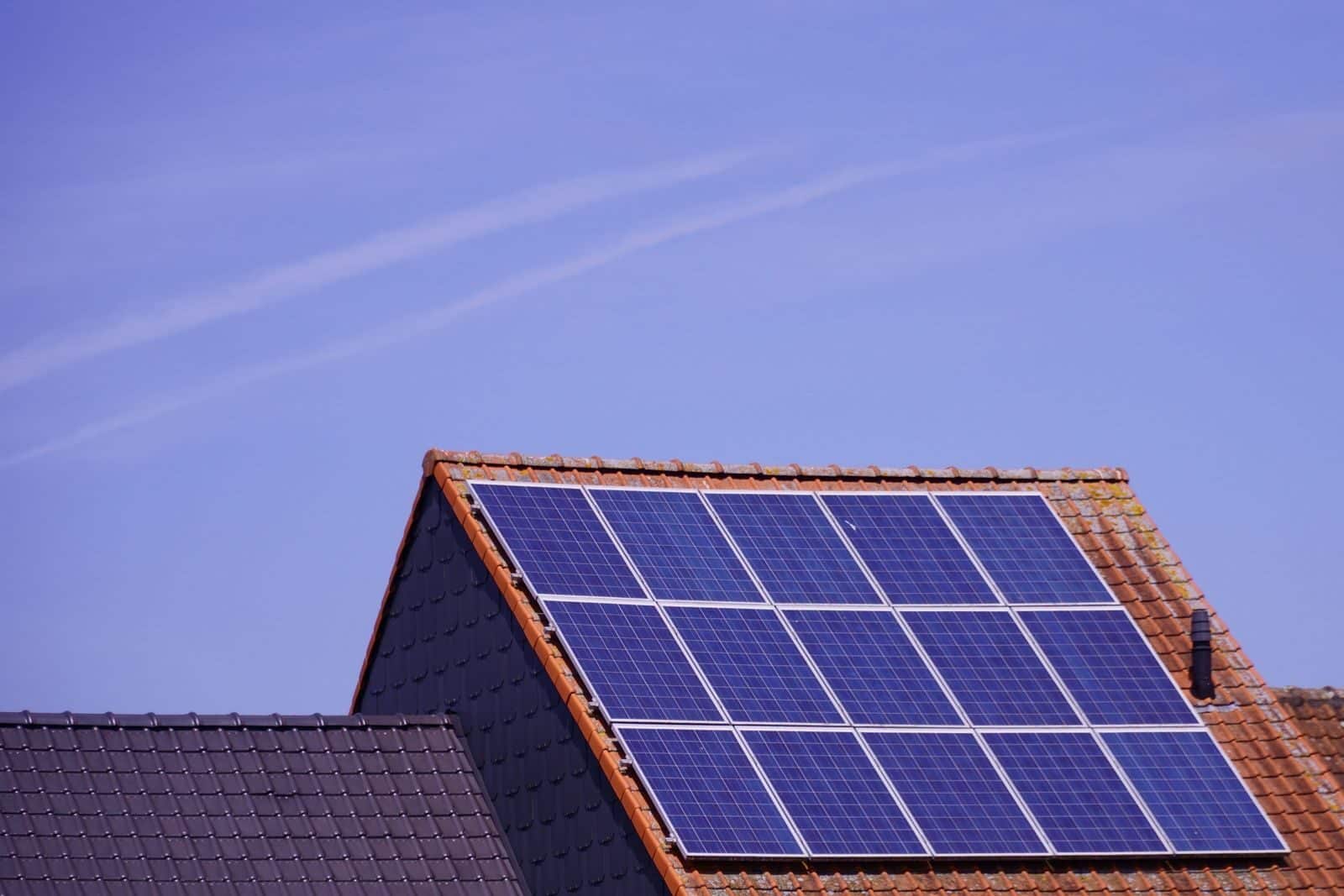
Solar panels and battery storage work together by generating electricity during daylight, using some of it in the home straight away and storing surplus for later. A battery can help shift solar electricity from the middle of the day to the evening, when panels are producing less or nothing.
The battery does not generate electricity, and it is not needed for solar panels to reduce your bills. Whether adding one makes sense depends on when your household uses power, how much electricity the panels export, your tariffs and the cost of the battery.
How solar panels and battery storage work together
Solar panels generate direct current (DC) electricity. An inverter converts it to alternating current (AC) for household appliances. A battery stores surplus electricity and releases it later through the system’s inverter and controls. The Energy Saving Trust explains how solar panels generate electricity for a home and how surplus can be stored or exported.
| When | Typical energy flow |
|---|---|
| Panels are generating and the home is using electricity | Solar electricity supplies some household demand directly. The system may send surplus to the battery. |
| The battery is full and panels are still producing surplus | Further surplus may be exported to the grid, depending on the system and export arrangements. |
| Solar output falls or stops | The battery can supply configured household demand. The grid supplies any remaining demand if the battery is low or its output is insufficient. |
| A cheaper tariff period begins | A compatible system may charge the battery from the grid for use later. |
The exact flow depends on the system’s controls and settings. The UK Government’s home battery guidance explains that batteries can store excess solar electricity or charge from the grid on a time-of-use tariff.
Use solar electricity directly where you can
Using solar electricity while the panels are generating avoids storing it and drawing it back out later. Battery storage involves some energy loss, so direct use can make better use of each unit produced. If it suits your routine, running flexible appliances or charging an electric vehicle during daylight can increase the amount of solar electricity used at home.
A battery is useful when there is more solar generation than the home needs at the time, followed by electricity use later. The amount of surplus changes with the weather, season, roof and household routine. A battery that is too large for the regular surplus may spend much of its time only partly charged.
Before choosing a size, compare your household’s electricity use with your solar generation and export data. The UK Prepared home battery size calculator can help organise the figures. The solar and battery planning checklist helps record your goals and questions for installers.
Does every solar home need a battery?
No. Solar panels can reduce electricity imports by supplying the home directly, and surplus may be exported under an eligible arrangement. A battery adds the option of using some of that surplus later, but it adds an upfront cost and does not return all the stored energy when it discharges.
A battery may be more useful where the home regularly exports solar electricity during the day and then imports electricity in the evening. It may add less value if much of the solar generation is already used as it is produced, or if exporting surplus is worthwhile on the household’s tariff.
Energy Saving Trust research published in July 2026 found that adding a battery can increase bill savings, but often does not recover its cost within its expected lifespan, particularly for households with a good export tariff. The report’s results vary by household and tariff, and its modelling used energy price cap levels from 2024. Treat any savings estimate as an estimate for your own system, not a guaranteed return.
When comparing a solar-only quote with a solar-and-battery quote, ask for the assumptions behind each one. A useful comparison considers the value of electricity you would buy later, any export income you would give up by storing it, battery losses, the tariff and the battery’s expected lifespan. The UK Prepared guide to whether solar power is worth it for a UK home covers the wider solar investment decision.
Adding a battery to existing solar panels
You may be able to add a battery to an existing solar installation, but compatibility depends on the panels, inverter, battery and controls already in place. Ask a competent installer to check whether the current equipment can work with the proposed battery, whether additional equipment is needed and how the change affects existing warranties.
For a new combined installation, ask the installer to explain the proposed system design and how it manages solar generation, battery charging, household demand and export. The UK Prepared home battery storage systems buying guide can help you compare the battery specifications that matter.
Export tariffs, grid charging and the battery
In Great Britain, eligible solar generators can apply for a Smart Export Guarantee (SEG) tariff, but payments are not automatic. Rates and eligibility requirements depend on the supplier and installation. If the battery can also charge from the grid, ask how the system measures electricity from solar separately from electricity imported from the grid. Some suppliers may not pay SEG for grid-charged electricity exported later.
The Energy Saving Trust’s SEG guide explains how export payments work with a storage system. For Northern Ireland, it advises checking with your supplier about available export tariffs, as the SEG is not available there.
A time-of-use tariff may let a battery charge from the grid when electricity is cheaper and supply the home later. This is a separate use from storing solar generation. Check the tariff terms and allow for storage losses before assuming that shifting grid electricity will save money.
Installation, registration and power cuts
Solar panels and batteries are fixed electrical equipment. Use an appropriately competent installer to check the design, inverter compatibility, battery location and required network notifications. For England, Scotland and Wales, GOV.UK’s energy-device registration guidance explains the DNO process. For Northern Ireland, ask your installer to confirm the local process with NIE Networks.
If you rent or live in a flat or shared building, get the landlord’s, freeholder’s or building manager’s agreement before arranging installation work. Check any property-specific permissions with the installer and relevant local authority.
A solar-and-battery system does not automatically provide electricity during a power cut. Backup operation needs suitable equipment and configuration to isolate the home safely from the grid. Read our separate guide to solar panels during a power cut for the outage-specific answer.
Solar panels and battery storage resources
- The Energy Saving Trust guide to solar panels covers generation, household use, export payments and combining panels with batteries.
- The Energy Saving Trust battery storage guide explains how batteries store solar surplus or charge from time-of-use tariffs, along with capacity, efficiency and lifespan.
- The Energy Saving Trust’s July 2026 technology and tariff report explains why a battery’s financial value varies between households.
- The Energy Saving Trust Smart Export Guarantee guide covers export payments, storage systems and differences between Great Britain and Northern Ireland.
- Ofgem’s guidance on co-locating electricity storage with generation explains scheme rules for generators considering battery storage alongside an eligible installation.
- GOV.UK guidance on registering home energy devices covers DNO notification and approval routes in England, Scotland and Wales.