
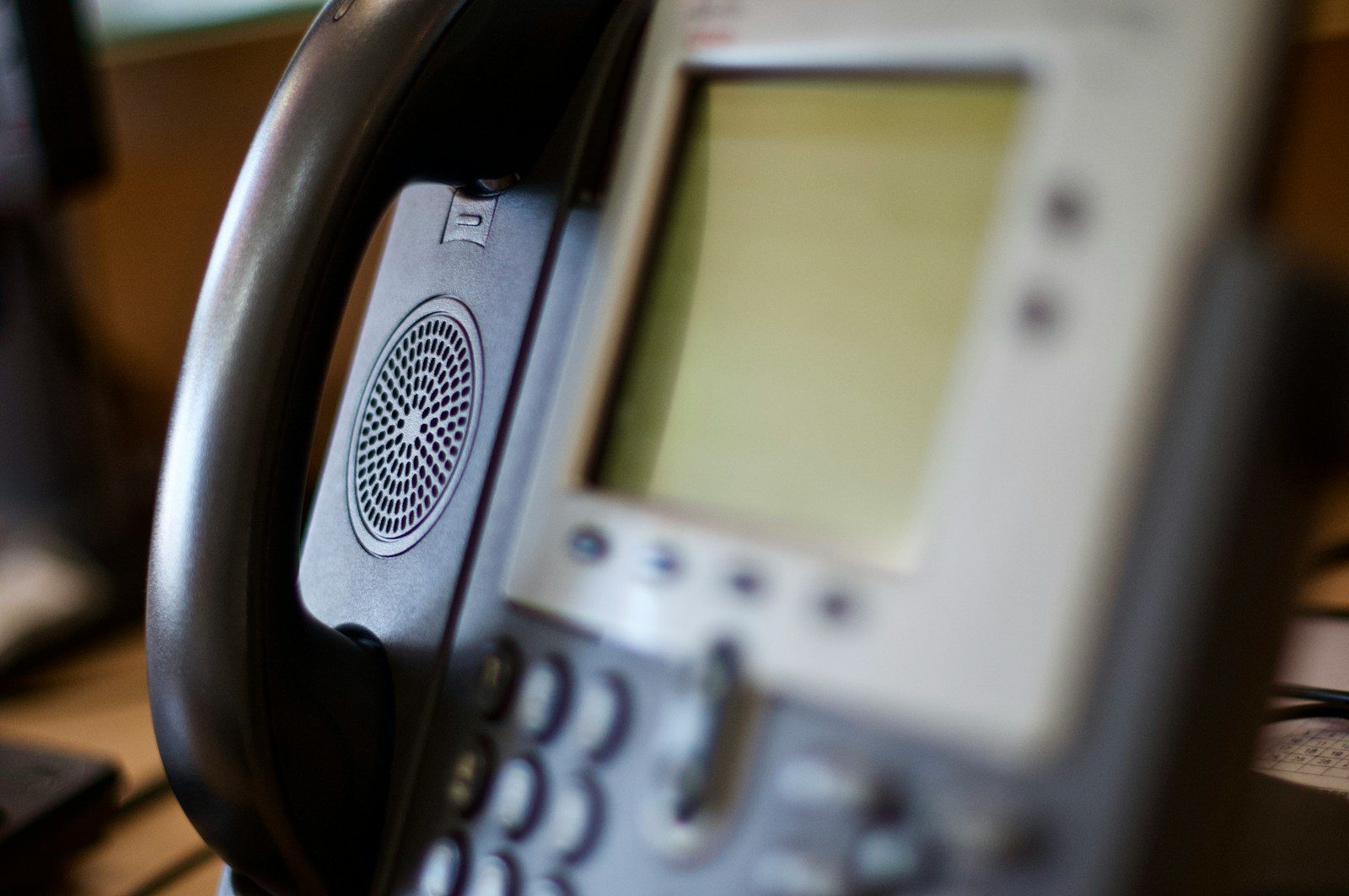
Most UK landlines will not work during a power cut once they have been moved to a digital phone service. A remaining traditional analogue line may keep a basic corded telephone working because the line is powered from the telephone network. A digital landline, including BT Digital Voice, normally depends on the electricity supply to your broadband router and, on full fibre, the optical network terminal as well.
A battery can keep the necessary equipment running for a limited time, but it does not make the service failure-proof. The fixed network must still be operating, every required device must be powered and any medical or telecare equipment must be compatible. BT’s mobile-based emergency handset is also no answer in a mobile not-spot or where a local mast loses power.
Which landlines work during a power cut?
| Home phone arrangement | Likely to work in a local power cut? | Main limitation |
|---|---|---|
| Traditional analogue line with a basic corded phone | Often yes, while the telephone network remains operational | The old network is being retired, and cordless phones still need mains power |
| Digital landline with no battery backup | No | The router and any fibre terminal lose power |
| Digital landline with correctly installed battery backup | Temporarily | Runtime is limited and the provider’s network must remain available |
| BT Emergency Hybrid Home Phone | Potentially, for outgoing emergency calls | Its fallback uses a mobile network and therefore needs usable mobile coverage |
| Mobile phone | Potentially | The handset needs charge and at least one mobile network must remain available |
| Satellite phone, satellite messenger or supported Satellite SOS phone | Potentially | Needs battery power, an appropriate service and a sufficiently clear view of the sky |
If your telephone plugs into the router rather than the old wall socket, treat it as a digital landline. A cordless base station also needs power, even if the underlying telephone line is still analogue. Do not assume that a phone will work simply because it looks like an ordinary landline handset.
Why BT Digital Voice is a loss of power-cut resilience
The public switched telephone network is old, increasingly difficult to maintain and scheduled to be retired on the BT Openreach network by 31 January 2027. Replacing it is understandable. However, from a household-resilience perspective, BT Digital Voice is a poor replacement for one particularly valuable feature of the old system: a basic corded telephone could draw enough power from the network to make a call when the home’s electricity was off.
Digital Voice moves that power dependency into the customer’s home. BT states plainly that its Smart Hub must have power for Digital Voice calls. Full-fibre customers may also need to keep the Openreach optical network terminal powered. A charged mobile, battery unit or other independent route therefore becomes part of the telephone system, whether or not the customer wanted that extra complexity.
This is not just an inconvenience. Losing a familiar landline can leave an older or disabled person unable to reach family, carers or emergency help. It can cause avoidable anxiety and isolation, and it may interrupt a care alarm or other connected device. Ofcom itself recognises that digital-landline users can need a high standard of resilience because they may treat the line as their main route for critical incoming and outgoing calls.
The limits of BT’s Emergency Hybrid Home Phone
BT’s Emergency Hybrid Home Phone contains a battery and mobile SIM. That is useful where the mobile signal is reliable, but it is not equivalent to a network-powered analogue line. BT’s own instructions say that an active call will drop when the power or broadband fails, callers to the landline number will reach voicemail or hear an engaged tone, and the user can then make emergency calls over the mobile network. BT lists up to eight hours of standby time and one hour of talk time during an outage.
That fallback is conditional on mobile reception and on the mobile network remaining operational. Emergency calls from an ordinary mobile can use another network where one is available, but roaming cannot create a signal in a genuine not-spot. Mobile masts also depend on electricity. Some have local backup power and some do not, according to the government’s telecare action plan. A widespread or prolonged outage can therefore remove the fixed broadband route and the mobile fallback together.
For remote homes, valleys, islands and buildings with poor indoor reception, presenting a mobile-dependent handset as the general emergency answer is inadequate. Check predicted coverage with Ofcom’s mobile coverage checker, but also test the actual networks at the property because maps are estimates and local terrain, walls, weather and congestion affect service.
Has BT done nothing about the problem?
It would be inaccurate to say that BT has taken no action. BT paused migrations after storm-related power cuts, offers battery units and hybrid handsets to eligible customers, led the formation of the Telecare Action Board and signed voluntary government charters. The wider industry also paused migrations after serious telecare incidents.
The justified criticism is that these are safeguards around a less power-resilient household service, not a universal engineering solution that preserves the old landline’s behaviour. Protection can depend on the customer being identified as vulnerable, telling several organisations, receiving the right equipment, keeping batteries charged, powering every box and having a working fixed or mobile network. The government’s modernisation charters are voluntary, and the minimum emergency-call resilience required by Ofcom is only one hour.
BT also has a wider responsibility in UK emergency communications. In 2024, Ofcom fined BT £17.5 million after a separate 2023 network fault caused nearly 14,000 unsuccessful 999 and 112 call attempts. That incident was not a Digital Voice power-cut failure, so it should not be misrepresented as one. It does show why relying on a single company, network or technology for every route to help is poor emergency planning.
Telecare and medical devices need an end-to-end check
An estimated two million people in the UK use telecare, including personal alarms and fall pendants. The government’s Telecare National Action Plan reports serious incidents, including a small number of fatalities, in which telecare equipment failed after the switchover. It says incidents involved failures to identify users and technical problems with connections. The document does not attribute every incident to BT.
A major gap remains. Communications providers must protect access to 999 for qualifying landline-dependent customers during a power cut, but the government says there is no equivalent regulatory requirement for uninterrupted telecare calls because most alarms contact an alarm receiving centre rather than dialling 999 directly. A router battery therefore does not prove that the complete alarm service is safe.
- Tell both organisations. Inform the phone provider and the telecare, alarm or monitoring provider. Do not assume that one has told the other.
- Identify every powered component. This may include the router, fibre terminal, phone base, alarm base unit, sensors and any adaptor.
- Confirm compatibility in writing. An analogue alarm connected through a router adaptor can suffer signalling problems even while the broadband appears to work.
- Arrange a supervised test. Follow the alarm provider’s procedure and make sure its monitoring centre knows a test is taking place. Do not create an unmonitored power cut around a life-safety system.
- Ask how long the whole system lasts. The shortest-lived required component determines the useful runtime.
- Plan for incoming contact. Carers and monitoring centres may need to reach the person, not merely receive an outgoing 999 call.
A communications backup does not power an oxygen concentrator, medicine fridge, dialysis equipment or another electricity-dependent medical device. Anyone relying on such equipment needs a separate clinical and power-cut plan agreed with the equipment supplier, care team and electricity network operator. Do not connect medical equipment to an unapproved battery or inverter.
What your provider must offer
Ofcom’s digital-landline guidance says that a provider must offer a free backup solution lasting at least one hour if a customer depends on the landline to contact emergency services and has no working mobile or reliable mobile signal. Some provider solutions last longer. Tell the provider before migration if you have a care alarm, medical pendant, disability, additional need or unreliable mobile reception.
Do not settle for a mobile-based fallback if there is no usable mobile coverage at the property. Ask for a battery solution that powers the actual router and, where present, the fibre terminal. BT says its Battery Back Up can power its Smart Hub and Openreach modem for at least one hour. Ask what happens after that hour and what longer-duration support is available for your circumstances.
If the provider migrates the line without adequate support, report the problem and make a formal complaint. Ofcom says unresolved complaints can be taken to an alternative dispute resolution scheme after six weeks, or sooner if the provider issues a deadlock letter. Also tell Ofcom, which uses consumer reports to identify patterns even though it does not resolve individual complaints.
Build more than one route to the outside world
The practical answer is layered communication. A battery protects against loss of power inside the home. A second mobile network protects against some fixed-line failures. Satellite can protect against loss of local cables and mobile masts. None is perfect, but independent routes are much less likely to fail for the same reason.
| Backup option | What it adds | What can still defeat it |
|---|---|---|
| Provider battery unit or suitable UPS | Keeps the router and fibre terminal powered | Expired battery, insufficient runtime or an upstream network outage |
| Charged mobile on another underlying network | A separate terrestrial route | No signal, mast power loss, congestion or depleted handset battery |
| Starlink or other satellite broadband | Internet access without the local phone cable or mobile mast | No terminal power, obstructed sky, equipment fault or satellite-service outage |
| Dedicated satellite phone or messenger | A portable route independent of local terrestrial networks | Obstructed sky, subscription or airtime issues, depleted battery and service-specific emergency calling rules |
| Supported smartphone Satellite SOS | Emergency text contact when mobile and Wi-Fi are unavailable | Unsupported handset or location, obstructed sky or flat battery |
Power the router and fibre terminal correctly
A purpose-made provider battery is the simplest short-duration option. For longer outages, a correctly sized uninterruptible power supply or portable power station can run the router, fibre terminal, telephone base and charging equipment. Check voltage, connectors, output type, total watts and expected watt-hours before buying. Our guide to the best portable power stations for home backup covers larger systems.
A USB power bank is useful for phones and may run some compatible routers through the correct regulated cable or USB-C power arrangement, but it must never be connected through an improvised lead. The best power banks for power cuts guide explains the smaller, more portable options. Whatever the battery, remember that keeping home equipment powered cannot repair an outage elsewhere in the provider’s network.
Use a genuinely different mobile network
A low-cost spare SIM can add useful diversity, but check which physical network it uses. Many virtual mobile brands share one of the four main UK networks, so two different brand names may still depend on the same masts. Test voice and data at the property, outside the building and at a safe nearby location. Keep the spare phone charged and make a normal test call periodically.
Why satellite belongs in a serious emergency communications plan
For a remote home with unreliable fixed and mobile coverage, satellite is no longer an eccentric last resort. The UK Space Agency says that some remote and rural places have conditions where satellite is the only practical connectivity solution, and government-backed projects have tested hybrid satellite and wireless networks in Northern Ireland and Shetland.
Starlink and other satellite broadband
Starlink residential satellite broadband or another available satellite service can provide a valuable second internet path that does not rely on the local telephone cable or mobile mast. If it remains connected, it may support messaging, email, Wi-Fi Calling and internet calling during a terrestrial outage.
It is not a magic emergency telephone. The dish and router need electricity, the installation needs a suitable view of the sky, the subscription must remain active and the satellite service itself can suffer faults. Wi-Fi Calling and app-based calls also depend on the relevant provider. A fixed satellite terminal should therefore have planned backup power and should be tested before it is needed. Do not assume that an internet calling app can place or correctly locate a UK 999 call.
Satellite phones and messengers
A dedicated satellite phone or two-way satellite messenger is a stronger independent layer for an isolated household, farm, expedition base or community hub. It can remain useful when local fixed and mobile infrastructure is unavailable. However, satellite devices generally need a clear enough view of the sky and may not work inside a building, beneath dense trees or beside obstructing terrain.
Do not assume that every satellite handset routes 999 or 112 like a UK mobile. Confirm the exact emergency procedure with the provider before purchase, store the correct contact numbers and practise using the device in a non-emergency. Keep the subscription or service plan active, protect spare batteries from temperature extremes and recharge them on a schedule.
Satellite SOS on a smartphone
Some supported smartphones can now contact emergency services by satellite when neither mobile nor Wi-Fi is available. For example, Google’s current UK Satellite SOS instructions describe a text-based exchange after dialling 999 or 112 on a supported phone. Availability depends on the handset, software, country and service, and buildings, trees or terrain can block the link.
Ofcom’s 2026 rules also enable further direct-to-device satellite services to develop in the UK. Treat this as a rapidly changing additional layer, not a reason to abandon batteries, mobile diversity or a community contact plan. Check the feature is active on the actual handset and run its built-in demonstration before relying on it.
What to do before the next power cut
- Identify the service. Ask the provider whether the line is analogue, Digital Voice, another VoIP service or an interim product.
- Declare every dependency. Tell the phone provider about poor mobile coverage, disability, telecare, alarms and any need for extra support. Contact each device supplier separately.
- Get the free provider backup where eligible. Confirm which boxes it powers and the stated runtime.
- Build a longer-duration power plan. Add the watts used by the router, fibre terminal, telephone and approved alarm equipment, then choose a safe battery with enough usable watt-hours.
- Add a separate communications route. Use another mobile network where coverage is sound, or consider fixed or portable satellite equipment where terrestrial coverage is weak.
- Test safely. Test phone, battery and satellite equipment without disrupting live medical support. Telecare tests should follow the service provider’s procedure.
- Keep information offline. Print family, carer, GP, telecare, electricity-network and communications-provider numbers. Agree who will visit if every electronic route fails.
- Maintain the system. Charge batteries, install updates, renew satellite plans and repeat a supervised test at sensible intervals and after any equipment change.
What to do when the power is already off
- Use the backed-up landline only as planned and conserve its limited battery.
- Reduce phone screen brightness, switch off unnecessary wireless features and reserve at least one charged device for urgent contact.
- Try 999 or 112 from a mobile in a life-threatening emergency. The phone can use another mobile network if one is available.
- If there is no terrestrial coverage and a supported satellite emergency feature is available, follow its on-screen instructions from a safe place with a clear view of the sky.
- If a telecare alarm is not responding, use the agreed alternative contact route. Call 999 or 112 for an immediate threat to life rather than waiting for technical support.
- Check on vulnerable neighbours in person when it is safe to do so. Do not travel into dangerous weather merely to find a signal.
- Use a battery radio and official local information if internet and mobile services are unavailable.
Landline power-cut checklist
- Know whether the phone is analogue or digital.
- Keep a basic corded handset if an analogue line remains.
- Tell the phone provider about landline dependence and poor mobile coverage.
- Tell the telecare or alarm provider separately.
- Power the router, fibre terminal and all other required equipment.
- Do not treat BT’s mobile-based hybrid phone as a solution in a not-spot.
- Keep at least one mobile phone and power bank charged.
- Use a second underlying mobile network where practical.
- Consider Starlink, another satellite broadband service or a dedicated satellite device for remote locations.
- Confirm how every satellite device reaches emergency help.
- Keep paper contact details and an in-person welfare plan.
Digital landline and emergency communications resources
- Ofcom’s digital-landline guidance explains the switchover, power-cut support, telecare precautions and complaint routes.
- GOV.UK Prepare guidance on phone and broadband outages covers household preparation, mobile emergency calls and support for vulnerable users.
- The Telecare National Action Plan sets out the known risks, responsibilities and safeguards for alarm users in England, while identifying UK-wide switchover issues.
- BT’s Digital Voice power-cut guidance confirms its hub needs electricity and directs customers without mobile reception to request support.
- BT’s Battery Back Up instructions show which equipment must be powered, including the additional fibre terminal used by full-fibre customers.
- Ofcom’s mobile coverage checker compares the four main network infrastructures and explains why predicted and actual reception can differ.
- UK Space Agency information on remote satellite connectivity explains why satellite can be the only practical option in some hard-to-reach UK locations.
- Ofcom’s direct-to-device satellite update tracks the UK regulatory framework enabling compatible phones and SIM devices to connect directly to satellites.