The most effective way to reduce electricity use at home is to measure consumption first and then target equipment that produces heat or runs for long periods. Electric heating, hot water, showers, tumble drying and cooking usually deserve attention before phone chargers or other very small loads. Fewer appliance cycles, lower suitable settings and better controls can reduce use without making the home impractical.
Begin with a seven-day electricity baseline, identify the overnight load and compare one change at a time. Switch off unnecessary standby equipment, use full laundry and dishwasher loads, boil only the water required and replace failed lamps with LEDs. Do not turn off refrigeration, medical equipment, alarms, ventilation or heating needed to protect health and the building.
Measure electricity use before trying to reduce it
Electricity consumption is measured in kilowatt-hours, written as kWh. Bills expressed only in pounds can hide whether use has changed because the unit rate or standing charge may also have changed. Record kWh if the aim is to reduce consumption.
- Use meter readings. Record the electricity meter at the same time each day for at least seven days. Subtract the earlier reading from the later one to find use over that period.
- Use a smart-meter display or account data. Look at live demand, daily totals and previous days rather than reacting to a single momentary spike.
- Find the overnight baseline. Compare readings before bed and on waking when heating, hot water, vehicle charging and major appliances are not scheduled to run.
- Test one suspected load at a time. Switch it off safely for a suitable period, then compare the reading or live display. Do not interfere with the meter, consumer unit or fixed wiring.
- Use a plug-in monitor carefully. It can measure a compatible plug-in appliance over a day or a full cycle. Check its current and power rating and never use it for fixed equipment.
Ofgem’s smart-meter guidance explains that an in-home display provides near real-time information and historical data that can reveal when use could be more efficient. The display does not save electricity by itself. Its value comes from using the information to change settings, schedules or habits.
Calculate what an appliance uses
For an appliance with a steady load, use this planning calculation:
Electricity used in kWh = power in watts × hours used ÷ 1,000
| Example | Calculation | Electricity used |
|---|---|---|
| 10 watt device for 24 hours | 10 × 24 ÷ 1,000 | 0.24 kWh |
| 100 watt appliance for 5 hours | 100 × 5 ÷ 1,000 | 0.5 kWh |
| 2 kilowatt heater for 3 hours | 2,000 × 3 ÷ 1,000 | 6 kWh |
| 9 kilowatt shower for 10 minutes | 9,000 × one-sixth ÷ 1,000 | 1.5 kWh |
The figures are mathematical examples, not typical appliance ratings. Electric showers often have a different rating from the example, and thermostatic appliances cycle on and off. Use the product label, manual or a measured complete cycle for a useful estimate. To calculate cost, multiply the kWh by the electricity unit rate shown on the bill. The standing charge remains payable regardless of how many kWh are used.
Prioritise appliances that create heat
Citizens Advice notes that appliances which become hot are usually among the most expensive to use, including equipment for heating rooms and water, washing, drying and cooking. A small reduction in a high-power load can save more electricity than pursuing numerous tiny standby loads.
| Area | First reduction to test | Avoid |
|---|---|---|
| Direct electric room heating | Heat occupied areas to a safe, comfortable level and improve timing | Heating empty rooms or using an oven as a heater |
| Electric shower | Reduce shower duration while maintaining normal hygiene | Fitting an incompatible low-flow head or altering the unit |
| Immersion heater | Check the timer and remove unnecessary boost periods | Lowering stored-water safety settings without professional advice |
| Tumble dryer | Air dry when conditions and ventilation allow | Drying laundry on heaters or creating persistent indoor damp |
| Oven and hob | Use the smallest suitable appliance, pan and cooking quantity | Undercooking food or ignoring product instructions |
| Kettle | Boil only the amount required, above the kettle’s minimum fill | Reboiling forgotten water repeatedly |
The Energy Saving Trust’s quick energy-saving guidance prioritises avoiding unnecessary tumble-dryer use, shorter showers, correctly insulated hot-water cylinders, fewer colder laundry washes, full dishwasher loads, switching off standby and turning off unneeded lights.
Control electric heating and hot water correctly
If space heating or hot water is electric, it may dominate winter consumption. Match operating periods to occupancy, use working thermostats and correct obvious scheduling errors. Improving insulation and draught proofing can reduce the heat required, but fixed vents and airflow needed for moisture control or combustion safety must remain open.
- Direct electric heaters: use thermostatic control and avoid heating unused rooms unnecessarily. Keep doors closed where appropriate, but maintain safe temperatures for people, pipes and the building.
- Storage heaters: set the input or overnight charge for the next day’s expected need and control the release of stored heat. Frequent peak-rate boost use may indicate that the input, output, tariff or heater sizing needs attention.
- Immersion heaters: learn which switch, timer or boost controls the cylinder. Heat the quantity and schedule needed by the household, following the cylinder and heating-system instructions.
- Hot-water cylinders: maintain the specified insulation and insulate accessible hot-water pipes where suitable. Do not disable scheduled hygiene cycles or reduce stored-water temperatures below safe settings.
- Electric showers: time under the shower affects both water and electricity use. Follow the manufacturer’s instructions for shower heads, cleaning and safe operation.
Citizens Advice guidance on storage and immersion heaters explains how input, output and boost controls interact with time-of-use tariffs. Using cheaper off-peak electricity can lower cost, but it does not by itself reduce the number of kWh consumed.
Do not control a heat pump like an electric panel heater
Heat pumps usually work most efficiently at lower flow temperatures over longer periods. Repeatedly switching one off and demanding a rapid warm-up can increase consumption or trigger less efficient backup heating. Energy Saving Trust heat-pump guidance recommends a steady temperature, an appropriate heating curve and modest set-back periods. Ask the installer to review unexplained high use, frequent boost operation or unsuitable hot-water scheduling.
Do not reduce heating below what is safe for the household. Older adults, babies and people with some health conditions are more vulnerable to cold. The NHS winter-health guidance recommends heating regularly used rooms to at least 18°C if possible, particularly where someone has a health condition.
Reduce laundry and dishwasher electricity
- Wash full loads without overloading. Reducing the number of cycles usually matters more than placing a few extra items into repeated small washes.
- Use a suitable lower temperature. A 30°C programme can reduce electricity for ordinary laundry when fabric-care, hygiene and detergent instructions permit it.
- Use eco programmes. They may take longer because they save energy by using less heated water rather than completing the job as quickly as possible.
- Choose an adequate spin speed. Removing more water in the washing machine can shorten tumble drying, provided the fabric allows it.
- Air dry when practical. Dry outdoors where possible. Indoors, maintain ventilation and continue using kitchen and bathroom extractor fans to limit condensation and mould.
- Do not overdry. Use sensor programmes where available, separate heavy and light fabrics, clean lint filters and maintain the dryer as instructed.
- Fill the dishwasher sensibly. Avoid running partial loads, but do not block spray arms or prevent water reaching the dishes.
Energy Saving Trust appliance guidance recommends full washing-machine loads and lower temperatures. When equipment eventually needs replacing, its energy label and consumption per cycle are more useful than judging efficiency from programme duration.
Use less electricity in the kitchen
- Plan several compatible dishes for one oven session rather than heating the full oven repeatedly.
- For a small portion, compare the microwave, air fryer, slow cooker or other smaller appliance with the full oven and use the suitable option.
- Match the saucepan to the hob ring, use a lid and heat only the amount of food or water required.
- Use the kettle’s level markings and minimum-fill line instead of estimating a large quantity.
- Avoid opening the oven door repeatedly, which releases heat and extends recovery time.
- Use residual heat only where the appliance and recipe allow it and the food will still be cooked safely.
- Keep seals, filters and cooking equipment clean in accordance with their manuals.
Cooking methods cannot be ranked without considering the food, portion, appliance size and cooking time. A smaller appliance often uses less electricity for a small quantity, while a well-used oven may be efficient for batch cooking. Measure repeat meals if cooking is a large part of the household total.
Run fridges and freezers efficiently without risking food
Refrigeration runs continuously, so small faults can accumulate into significant use. Keep a fridge between 0°C and 5°C and check it with a suitable thermometer rather than setting it unnecessarily cold. Follow the appliance instructions for the freezer setting.
- Allow the ventilation clearances specified around the appliance and do not block internal air paths.
- Check that door seals are clean, undamaged and closing fully.
- Defrost a manual-defrost freezer before excessive ice builds up, following the manufacturer procedure.
- Let cooked food stop steaming and cool promptly before refrigeration, while still following food-safety time limits.
- Know what is needed before opening the door and avoid leaving it open while unloading shopping.
- Place the appliance away from avoidable heat sources if the kitchen layout allows.
Food Standards Scotland’s household guidance confirms the 0°C to 5°C fridge range and advises cooling cooked food quickly before refrigeration. Reducing electricity should never mean storing perishable food above safe temperatures.
Cut lighting, entertainment and standby waste
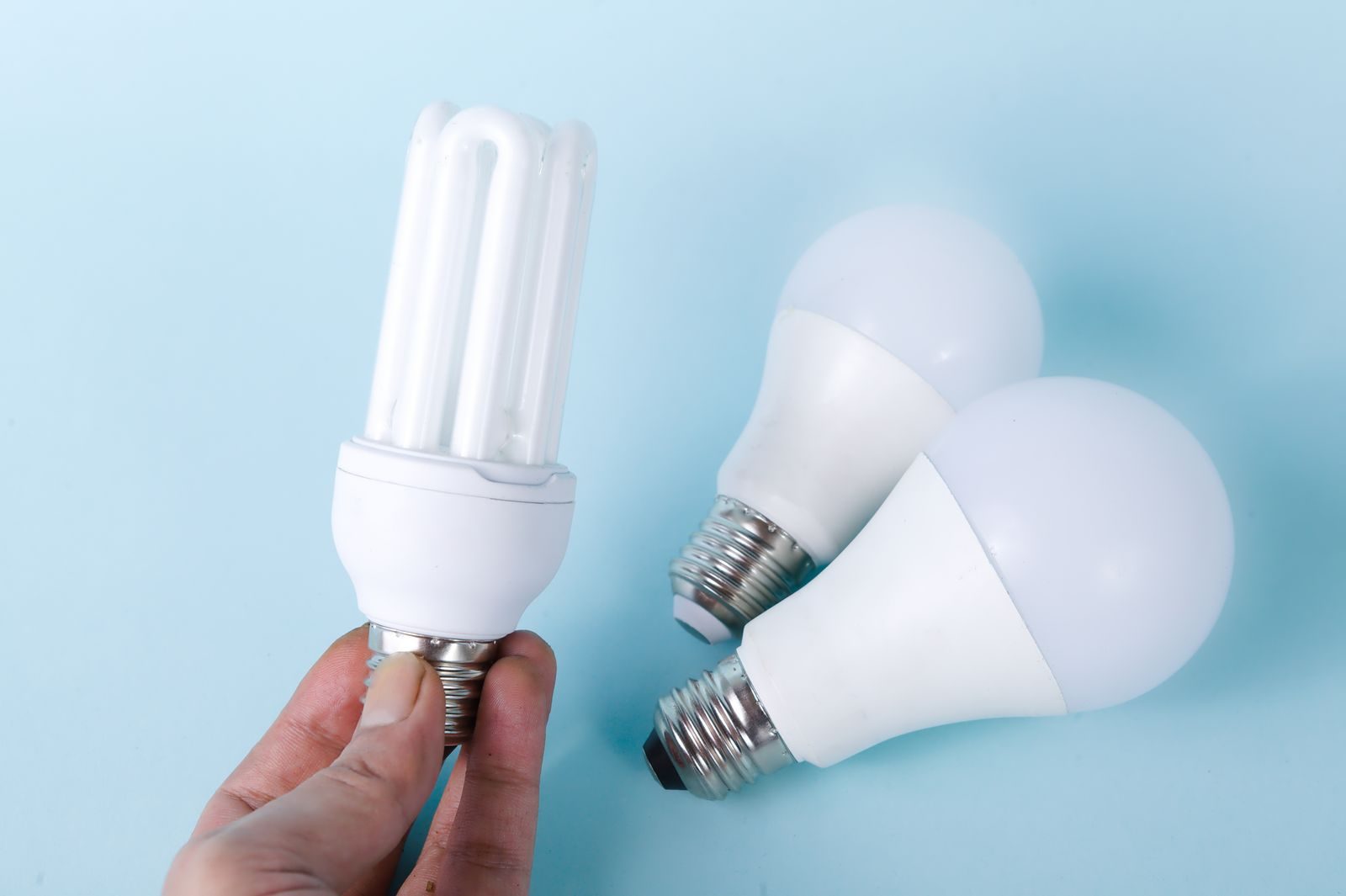
- Use LEDs. Replace failed halogen or incandescent lamps with suitable LEDs, matching the fitting, brightness and dimmer compatibility.
- Turn off unused lights. Use daylight where practical and avoid illuminating empty rooms or outdoor areas unnecessarily.
- Enable power management. Set televisions, monitors, games consoles and computers to sleep or switch off after a sensible period.
- Reduce screen demand. Very large screens generally consume more than smaller equivalent models. Avoid excessive brightness settings where a lower level remains comfortable.
- Switch off suitable standby loads. Use the wall switch where safe and convenient, or a correctly rated switched extension.
- Keep essential equipment powered. Fridges, freezers, medical devices, alarms, heating controls and equipment performing updates or recordings may need to remain connected.
Before using a smart plug or standby controller, check that it is rated for the appliance and that remote switching is appropriate. Do not use an ordinary smart plug to control high-power heating or fixed equipment unless both manufacturers expressly support that use. Automation is useful only when it does not introduce an electrical, fire or data-security problem.
Understand what lowers use and what only lowers the bill
| Action | Reduces household electricity use? | May reduce the bill? |
|---|---|---|
| Shorter electric shower | Yes | Yes |
| Fewer tumble-dryer cycles | Yes | Yes |
| Moving the same load to an off-peak tariff period | No, not by itself | Possibly |
| Running the same appliance from rooftop solar | No | Possibly, by reducing imported electricity |
| Charging and discharging a home battery | No; storage introduces some losses | Possibly, depending on tariff and generation |
| Replacing a task with a genuinely more efficient method | Yes | Usually |
Time-of-use tariffs can reward moving flexible demand, such as vehicle charging or laundry, away from expensive periods. Check that the peak rate does not outweigh the benefit and do not run noisy or higher-risk appliances overnight unless the manufacturer permits unattended operation. Solar panels and batteries can reduce grid imports, but reducing the energy required remains valuable because it also makes stored or self-generated electricity last longer.
Choose worthwhile appliance and home upgrades
Do not replace a working appliance automatically. Compare its measured annual use with the likely consumption, purchase cost, size and expected life of a replacement. Refrigeration may justify close attention because it runs continuously, while rarely used equipment may offer little return.
- Read the full energy label, including annual kWh or consumption per 100 cycles, rather than relying only on the A to G class.
- Compare products of a suitable size. A larger appliance can use more electricity than a smaller model even when both have the same efficiency class.
- For a tumble dryer, compare consumption and sensor control as well as drying time and capacity.
- For an electrically heated home, prioritise appropriate insulation, draught reduction and heating controls before adding generation or storage.
- Consider a properly designed heat pump when replacing direct electric resistance heating, but assess the building, emitters, hot-water system and controls together.
- Renters should obtain permission before permanent alterations and ask the landlord to address defective heating, insulation or appliances supplied with the property.
GOV.UK energy-labelling guidance explains the gradual move to rescaled A to G labels. For property-level improvements, the GOV.UK home energy service provides recommendations for owners in England and Wales and directs Scottish and Northern Irish households to the appropriate national advice services.
Follow a seven-day electricity-reduction plan
- Day one: record the meter, daily kWh and overnight baseline without changing normal behaviour.
- Day two: list every scheduled heating, hot-water, vehicle-charging and high-power appliance period.
- Day three: correct one obvious timer, boost or thermostat problem and record the result.
- Day four: combine laundry or dishwasher loads and avoid one unnecessary drying cycle.
- Day five: measure a frequently used kitchen, entertainment or home-office appliance.
- Day six: switch off safe nonessential standby loads and check lighting settings.
- Day seven: compare total kWh with the baseline, retain changes that worked and choose the next largest load to investigate.
Repeat the comparison over a longer period and account for weather, occupancy, visitors, laundry volume and electric-vehicle mileage. A cold week cannot be compared fairly with a mild one if the home uses electric heating. The aim is a durable lower baseline, not one artificially low day that cannot be maintained.
Home electricity-reduction checklist
- Track daily kWh rather than judging only by cost.
- Find the overnight baseline and unexplained continuous loads.
- Prioritise electric heating, hot water, showers, drying and cooking.
- Use full laundry and dishwasher loads with suitable eco settings.
- Air dry safely without disabling ventilation or creating damp.
- Keep refrigeration within food-safe temperatures.
- Use LEDs and switch off suitable lights and standby equipment.
- Control heat pumps and storage heaters according to their design.
- Compare annual kWh and size when replacing an appliance.
- Distinguish lower consumption from tariff shifting or self-generation.
- Protect medical needs, safe indoor temperatures and essential services.
- Review the meter after each change and keep the measures that work.
UK household electricity resources
- Ofgem smart-meter guidance explains in-home displays, historical consumption data, tariff access and smart-meter installation.
- Citizens Advice in-home display guidance explains how to use smart-meter information and appliance settings to investigate consumption.
- Energy Saving Trust quick tips covers standby, laundry, drying, showers, kettles, dishwashers, lighting and hot-water-cylinder insulation.
- Energy Saving Trust appliance guidance explains energy labels, annual consumption, appliance size and efficient use.
- Citizens Advice electrical-appliance guidance helps households compare running costs and identify high-demand uses.
- Citizens Advice storage and immersion-heater guidance covers input, output, boost, tariffs and hot-water controls.
- Energy Saving Trust heat-pump guidance explains heating curves, set-back temperatures, longer operation and hot-water scheduling.
- NHS winter-health guidance explains safe warmth and the greater cold risk for some people.
- GOV.UK product energy-label guidance explains the current rescaled appliance labels.
- GOV.UK home energy recommendations provides property-specific improvement advice and national signposting.