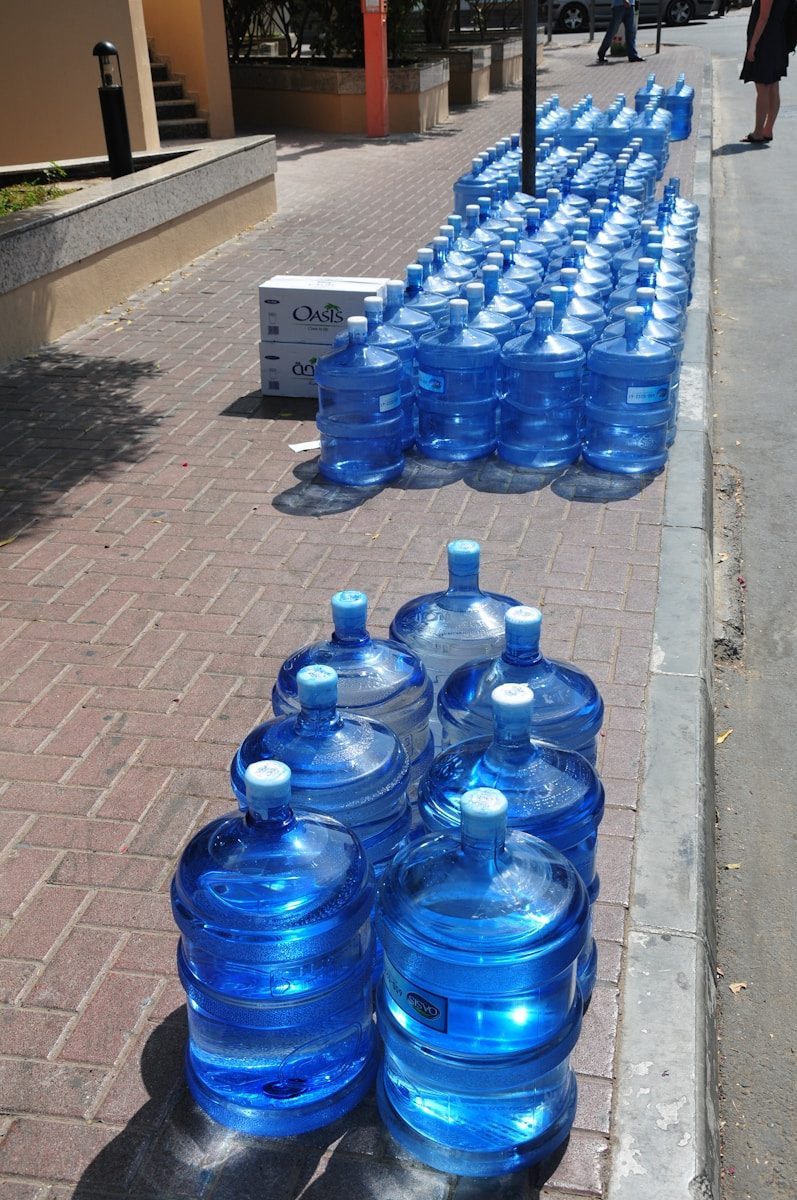
Factory-sealed bottled water is the simplest starting point for a long-life reserve. Reusable food-contact containers add bulk capacity, while collapsible carriers work better as compact spares. Check filled weight, cap seals, opening size and whether a tap can be removed for cleaning. One litre weighs about one kilogram, so several small cans may be easier to manage than one large vessel. Use our emergency water quantity guide and water calculator when planning capacity. For prices and ordering, click on the product image.
As an Amazon Associate UK Prepared earns from qualifying purchases.
Best Water Containers for Emergency Storage – our recommendations
Sealey WC20 Water Container 20L with Spout
Sealey’s WC20 is a sound conventional choice for a home reserve. The 20 litre polyethylene can has a screw cap, inner sealing plug, pouring spout and a provision for an air vent, without adding a tap that may be knocked during storage. Its manufacturer describes the material as food grade. A full can weighs more than 20kg, so it is better placed low down and moved with both hands. The relatively narrow opening also demands a proper cleaning and rotation routine rather than casual topping up.
Liquipak 25L Food-Grade HDPE Water Container
This British-made Liquipak can prioritises dense storage rather than dispensing convenience. Its 25 litre D-shaped body is made from food-contact-approved HDPE and uses a DIN 61 screw cap with an EPE gasket. The flat sides allow stable, space-efficient placement, although stacking filled containers should follow the seller’s guidance and use a level base. At more than 25kg when full, it is not a sensible everyday pouring vessel for everyone. Pair it with smaller carriers if anybody in the household would struggle to lift it safely.
The Somerset Clear Water Company 4 x 5L Water Containers
Four separate 5 litre containers are often more useful than one 20 litre can. This set uses food-safe HDPE bottles with individual screw caps, making it easier to rotate part of the supply, share water between rooms and carry a manageable amount. The modular format also limits the loss if one cap leaks. It takes more shelf area and creates four containers to clean, label and date. The selected Amazon child listing is specifically the four-pack, so check that quantity remains selected if Amazon displays alternative pack sizes nearby.
REDCAMP 15L Camping Water Container with Tap
The selected 15 litre REDCAMP balances capacity with a more manageable filled weight. A large cap helps with filling and cleaning, while the tap is convenient when the container stays on a counter during an outage. The moulded handle and rectangular body suit car camping as well as household use. As with any tap-equipped carrier, transport it upright and check both the cap and tap seals before trusting it near stored food or flooring. It costs more than a plain jerry can, so the dispensing convenience should earn its keep.
FAITH Carp Tackle 18L Water Jerry Can with Tap
FAITH’s 18 litre jerry can is aimed at anglers, but the same form works well beside a temporary kitchen or washing station. It combines a drain tap with a separate vent plug, allowing steadier flow than a sealed container that repeatedly gulps air. The green, impact-resistant body is less clinical than a translucent water can, so label it clearly and never repurpose a vessel previously used for chemicals. It becomes a substantial lift when full, and the projecting tap deserves protection during transport and long periods in storage.
Hünersdorff 816710 Hygiene Canister 22L
This 22 litre Hünersdorff canister is unusually useful where stored water must also support hand hygiene. A drain tap dispenses the water, while a built-in 250ml bottle keeps soap or sanitiser beside it. The food-safe, BPA-free polyethylene body has a large opening for filling and cleaning. It is a convincing choice for an outbuilding, temporary utility area or household isolation setup, but over 22kg of water is awkward to relocate. The soap dispenser is wasted if the only requirement is sealed drinking-water storage, where a simpler can costs less.
Dometic GO Hydration Water Jug 11L
Dometic’s 11 litre jug is the premium modular option. It uses BPA-free, food-grade LDPE and has two openings, a built-in spigot and a quick-connect fitting for Dometic’s powered faucet. Removable web handles and tie-down guides are more practical in a vehicle than a single hard handle. At home, the moderate capacity is easy to move and the dispensing choices suit regular camping use between outages. The price is difficult to justify for a container that will remain untouched in a cupboard, especially once the optional powered tap is added.
Stanley 1913 Fast-Flow Water Jug 7.5L
The Fast-Flow is an insulated dispenser rather than a long-term bulk tank. Its 7.5 litre capacity, leakproof lid, sturdy latches and high-flow spigot make it useful for keeping a working supply cool during a summer outage. Stanley states that it keeps drinks cold for up to 13 hours and iced for up to two days, depending on conditions. The smaller volume is easy to handle but insufficient as a household’s only reserve. Its bulky insulation also consumes far more storage space per litre than an ordinary HDPE container.
Igloo 5 Gallon Seat-Top Water Cooler
Igloo’s orange cooler stores roughly 19 litres and is built around communal dispensing. Thick insulation slows warming, while the drip-resistant spigot, reinforced handles and tethered seat-top lid suit a garage, worksite or temporary household water point. It is much easier to draw a cup from than to tip a full jerry can. The cylindrical body is bulky, expensive in the UK and still weighs around 20kg once filled. Choose it for cooling and repeated daily use, not for the most space-efficient way to store several days of water.
Hanaoyo 20L Camping Water Jug
Hanaoyo uses a broad, flat 20 litre shape that can sit on its side for dispensing. The listing specifies BPA-free, food-grade PE, a tap, extension tube, dual openings and a cap that protects the faucet during transport. This layout works under a shelf or on a vehicle platform where a tall upright can would be awkward. The newer listing has a shorter ownership record than established camping brands, so inspect every seal on arrival and carry out a full leak test. Do not store it above anything vulnerable to water damage.
KOBONA 10L Plastic Water Container with Tap
KOBONA’s rigid 10 litre carrier is a practical size for older users, flats and households that prefer several small reserves. Its moulded handle and tap allow controlled dispensing without lifting the whole container each time, while the rectangular shape is simpler to place than a bucket. The marketplace listing provides less detailed material documentation than the established manufacturers in this guide. Check the product’s food-contact markings and instructions when it arrives, wash it as directed, and reserve it exclusively for water. For long unattended storage, a securely capped can remains the more conservative choice.
Silverline 159729 Collapsible Water Container 20L
Silverline’s inexpensive PVC carrier folds almost flat and includes top and side handles plus a twist tap. It is useful as an empty backup for collecting water from a distribution point or filling when an interruption is expected. A flexible 20 litre cube is less stable and less pleasant to carry than a rigid can, particularly when it is only partly full, and repeated folding eventually stresses creases. Keep it clean, dry and protected from sharp objects. For water stored continuously over months, choose a rigid food-contact container with clearer material documentation.
Summit 10L Folding Water Carrier
At about 200g, this 10 litre Summit carrier is easy to keep in a car kit, evacuation bag or camping box. It rolls into a compact package and has an integrated tap, providing temporary storage without surrendering a cupboard to an empty jerry can. Ten litres is also a realistic one-handed carry for many adults. The lightweight construction is the compromise: it needs support on a level surface, protection from abrasion and careful drying before storage. Treat it as a collection and short-term dispensing tool rather than the main container for a rotating home supply.
Sea to Summit Watercell X 20L
The Watercell X is a technically better flexible carrier for households that also camp. Its abrasion-resistant shell surrounds a food-grade TPU lining, and the wide opening simplifies filling and cleaning. The multi-function cap controls flow and includes a shower fitting, while webbing handles offer several carrying and hanging options. It packs far smaller than a rigid 20 litre can, but that convenience is costly and does not turn a soft bladder into a stackable storage tank. Dry it thoroughly, keep it away from sharp edges and avoid suspending the full weight unless instructed.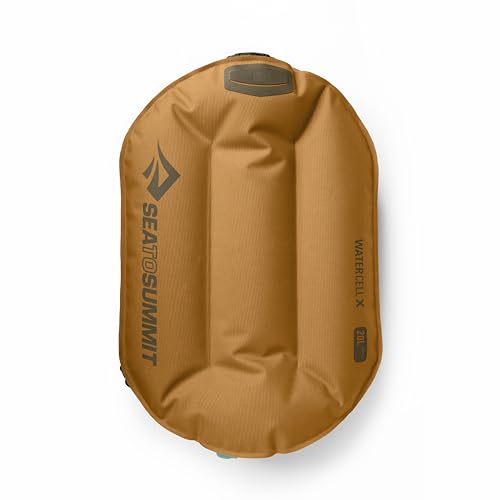
MSR Dromedary Bag 4L
MSR’s smallest Dromedary is for carrying a limited reserve through rough use, not stocking a family cupboard. The 4 litre bag has a tough 1,000-denier exterior, a BPA-free food-grade lining, perimeter webbing and a three-in-one cap for drinking, pouring and filling. It can be strapped into a vehicle kit or carried when a rigid can would be cumbersome. Its durability and compactness command a high price per litre, and the small capacity disappears quickly in an outage. A rigid home reserve should sit behind it in the plan.
HydraPak Expedition 8L Water Carrier
HydraPak’s Expedition occupies the middle ground between a small reservoir and a bulky camp can. The 8 litre flexible body weighs about 257g, rolls for storage and uses a wide opening for filling. A flexible webbing handle helps with carrying and hanging, while the dispensing connection works with compatible HydraPak accessories. It is useful for collecting an additional day’s water or moving a reserve between rooms. Flexible walls are harder to stand and pour from without support, and the bag must be cleaned and completely dried before it returns to long-term storage.
IWH 19602 Foldable Water Canister 10L
The IWH 19602 takes the familiar folding jerry-can form and adds a dispensing tap. Its 10 litre capacity and roughly 190g empty weight make it a sensible spare for a vehicle, caravan or small flat, particularly where empty storage volume matters. Unlike the roll-style Summit, it expands into a more conventional rectangular canister. The Amazon listing gives limited material and long-term storage detail, so use it for temporary collection and dispensing unless the supplied instructions explicitly approve longer potable-water storage. Inspect folds and the tap each time it is brought back into service.
LifeStraw Peak Series 3L Gravity Water Filter System
This is a compact treatment bag rather than a large drinking-water store. The 3 litre gravity system filters bacteria, parasites, microplastics, silt and cloudiness, making it useful if the safety of an emergency source is uncertain. It can hang for hands-free filtering and packs down after use. The filter does not make seawater drinkable and should not be assumed to remove every dissolved chemical or virus. Three litres is also too little for a household reserve. Store clean tap water first, then regard the LifeStraw as a carefully maintained secondary option.
LifeSaver Jerrycan 20000UF Water Purifier
LifeSaver combines an 18.5 litre container with a manually pressurised purifier. The replaceable ultrafiltration cartridge is rated for up to 20,000 litres and is designed to remove viruses, bacteria, cysts and parasites, while the carbon stage improves taste and odour. It is relevant to isolated properties, group travel and prolonged disruptions where a known safe tap-water reserve may run out. The price, 4.26kg empty weight and maintenance requirements are substantial. Unfiltered source water stays inside the can, so follow the cleaning, storage and cartridge instructions exactly.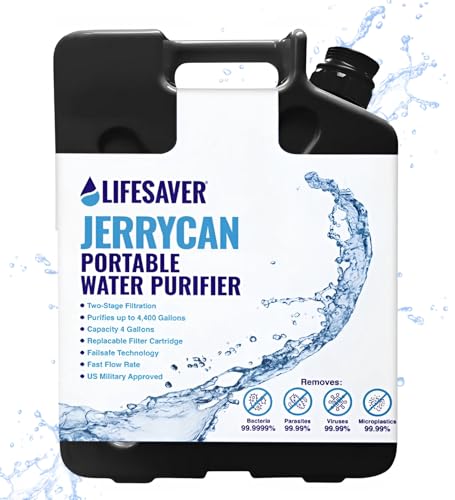
WaterBOB 100 Gallon Bathtub Water Storage Container
WaterBOB is the one high-capacity option that occupies almost no space until needed. The food-grade plastic liner fits a standard bath and can hold up to 100 US gallons, about 378 litres, with a supplied pump for dispensing. It only helps when there is enough warning to fill it while the mains supply remains safe, and the filled liner is not portable. It is normally treated as a single-use emergency product, not a substitute for water already stored. Bath size, cleanliness and the manufacturer’s filling instructions all matter before deployment.
Water Containers for Emergency Storage Resources
- How much emergency water should you store? – UK Prepared’s guide to calculating a realistic household reserve.
- What to do during a water supply outage – Practical steps for reporting an interruption, conserving supplies and following safety notices.
- Emergency water calculator – Estimate drinking, cooking and basic hygiene quantities for the people and pets in a household.
- GOV.UK Prepare for emergencies – UK guidance on minimum drinking-water quantities and broader household emergency supplies.
- GOV.UK water supply interruptions and outages – Planning advice, Priority Services Register information and warnings about unsafe alternative sources.
- Drinking Water Inspectorate – Independent information on drinking-water quality and the notices issued when a public supply may be unsafe.
- Citizens Advice water supply interruption guidance – Explains alternative supplies, priority support and possible compensation in England.
- CDC emergency water storage guidance – Detailed advice on choosing, cleaning, filling, labelling and rotating home water containers.
Click the button below to purchase all of the products in this Best Water Containers for Emergency Storage guide from Amazon.
Buy from Amazon.co.ukDisclosure: as an Amazon Associate, UK Prepared earns from qualifying purchases.